Custom Jacquard Knit Beanies
Knit your pattern into the beanie. Our factory develops jacquard graphics, stripes, repeated motifs and seasonal designs around your artwork, yarn colors and the shape of the finished product.
Plan the Pattern Around the Beanie Shape
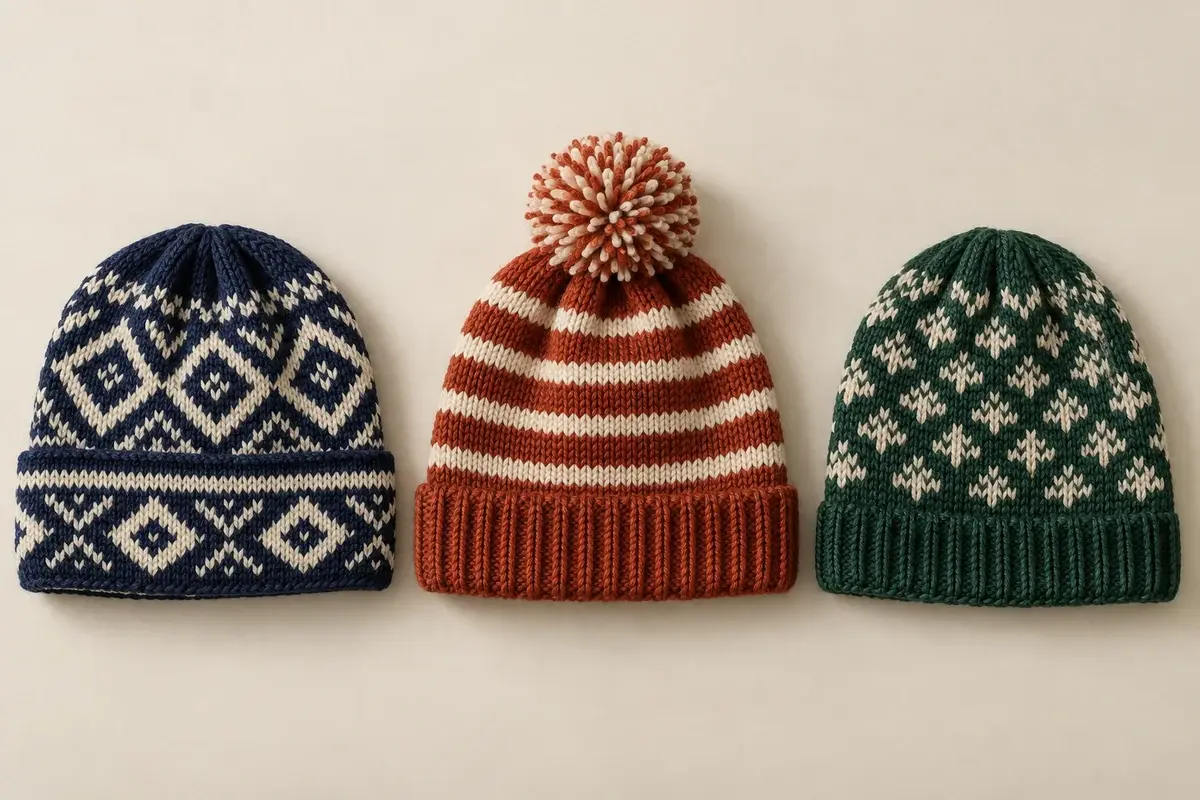
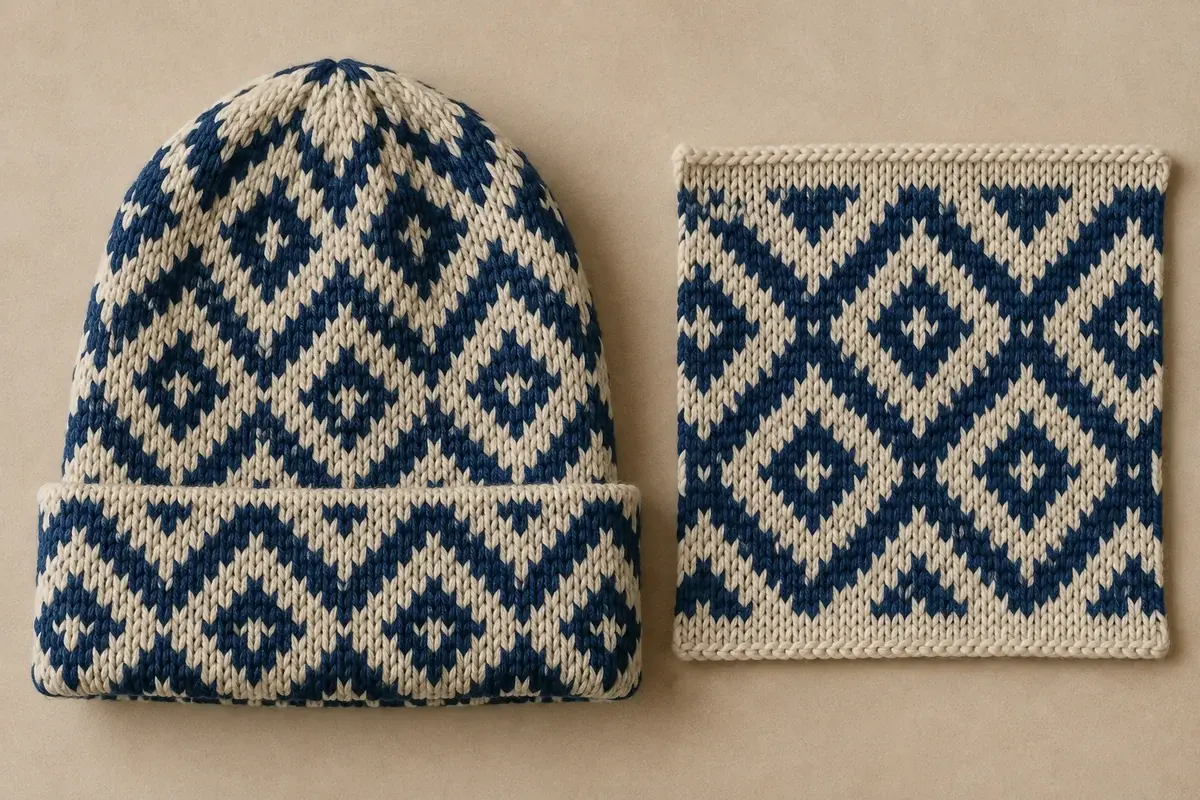
Pattern size, repeats, gauge and colors must fit around the cuff, crown and seams. We review the artwork and construction together.
- Beanie styles: Cuffed, pom pom, fisherman, slouchy, cuffless and Christmas beanies, depending on the yarn, gauge and construction.
- Orders: Brand graphics, repeating motifs, stripes, team patterns and seasonal designs.
- Before sampling: Review the full pattern area, yarn colors, stitch grid, crown shaping, cuff fold, seams and inside appearance.
Turn Artwork Into a Knitted Pattern
Set the pattern area, stitch grid and colors before sampling the full beanie.
Pattern Area and Repeat
Choose a placed graphic, band or repeating pattern.
- Mark the start, end and visible area of the pattern.
- Check how the artwork meets at the seam or repeat point.
- Account for the cuff fold, crown reduction, pom pom and other components.
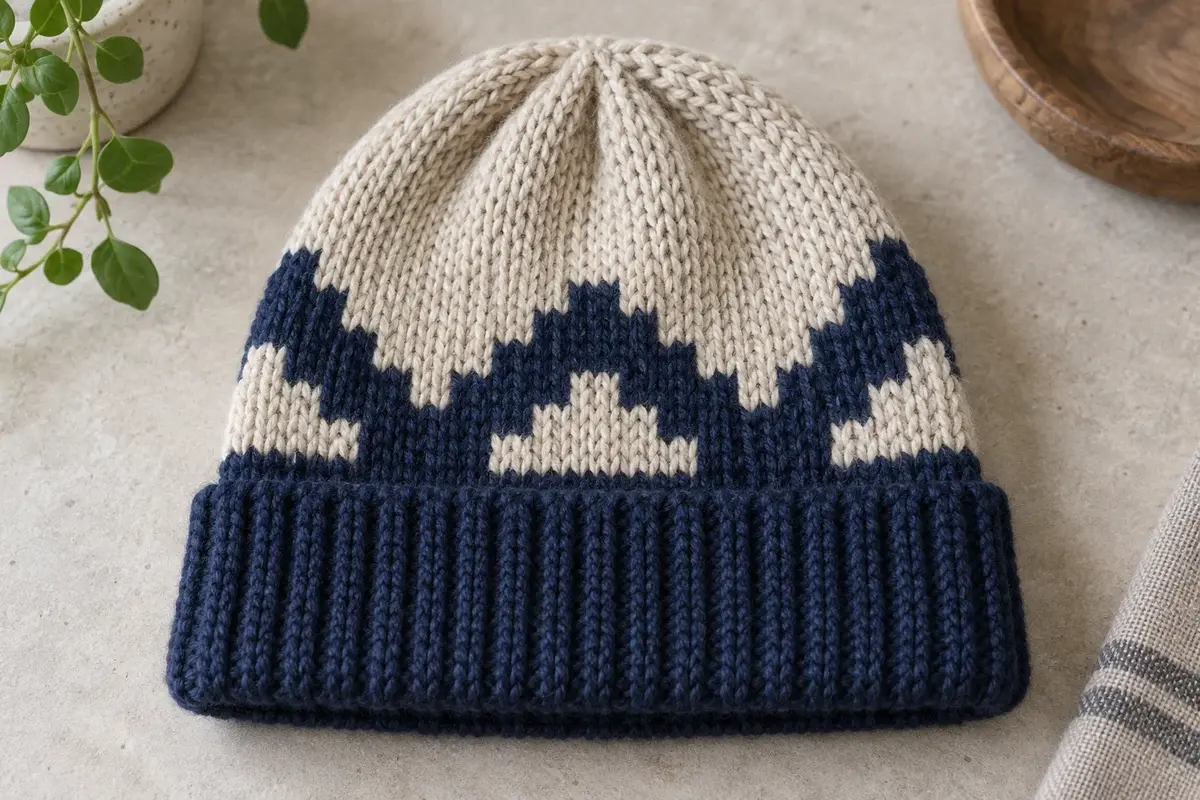
Gauge and Visible Detail
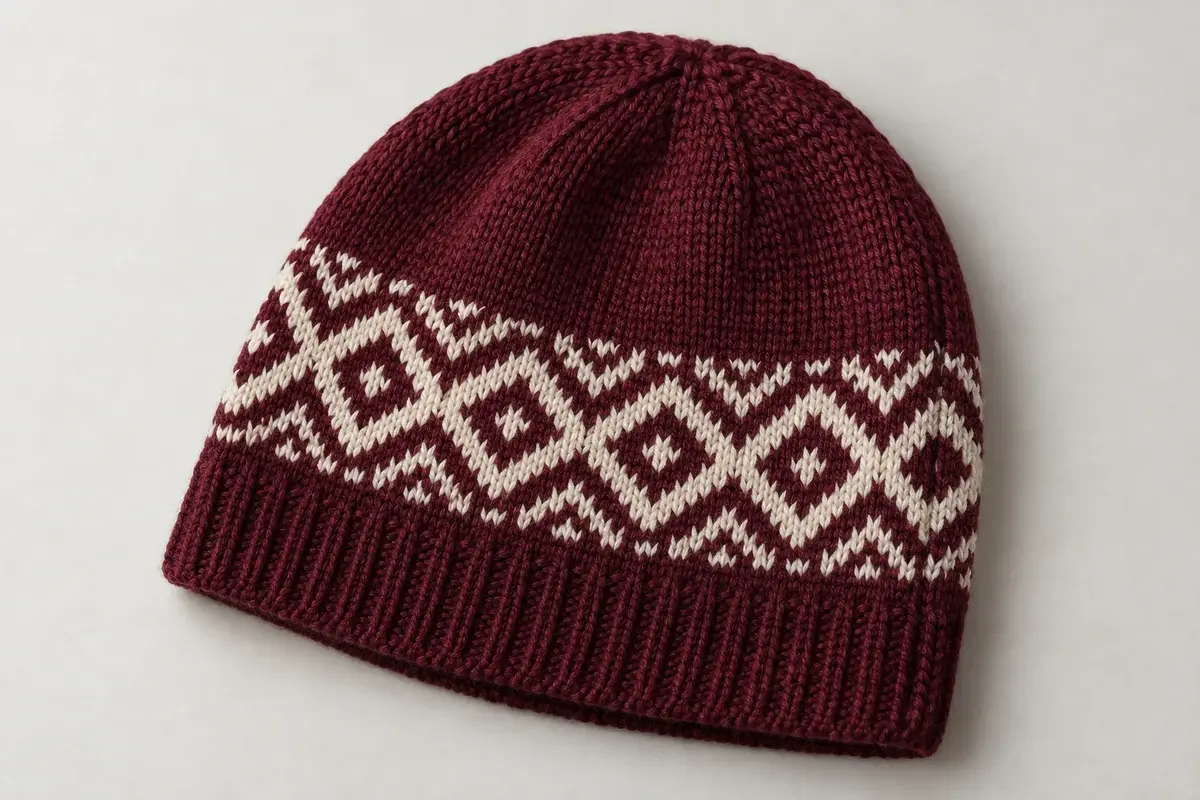
Our 3G, 5G, 7G and 12G options give different stitch grids. We review the selected yarn and image at the intended finished size.
- Fine details need enough workable stitches in the available area.
- Letters, lines and curves may need adjustment when converted to the knit grid.
- Approve the charted result on the actual gauge, not from the original image alone.
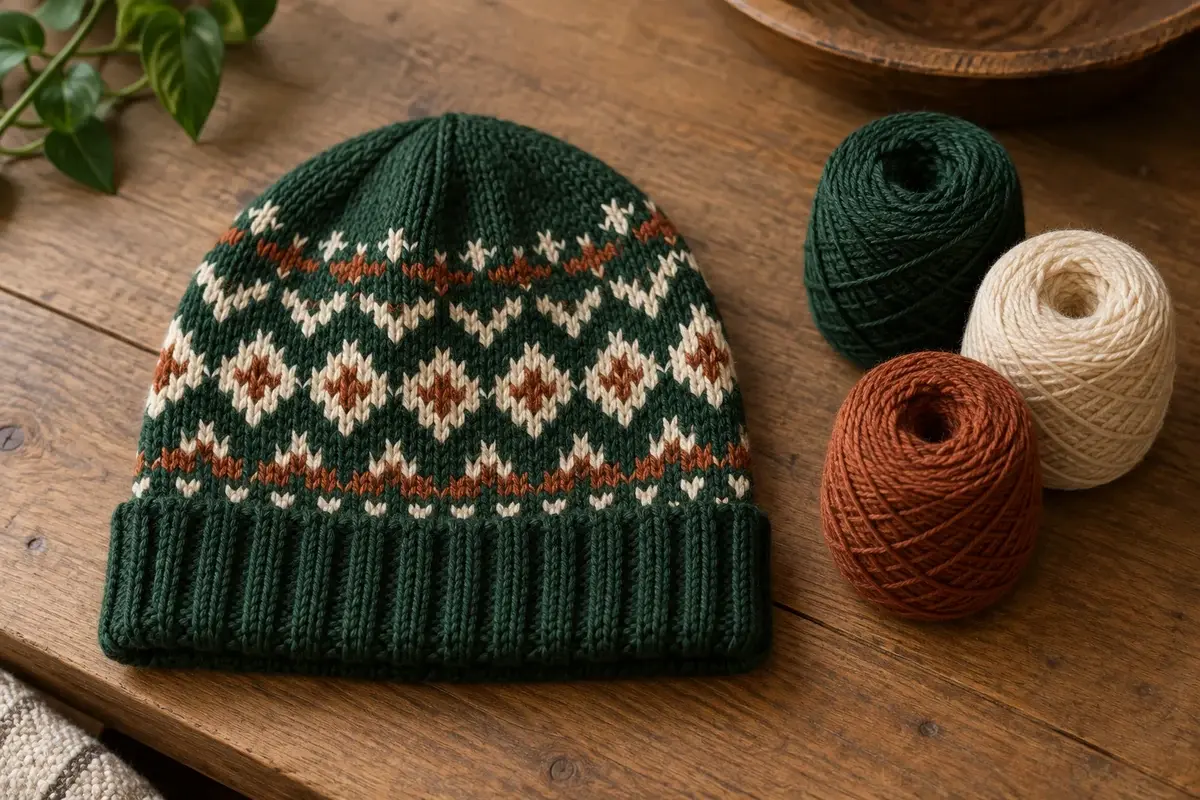
Yarn Colors and Contrast
Choose colors from yarns that work in the same construction. Confirm supply and color references, then check the knit sample.
- Provide Pantone references or physical swatches for required colors.
- Check yarn supply, material, thickness and color combination before sampling.
- Approve the knitted colors on the same product and pattern planned for production.
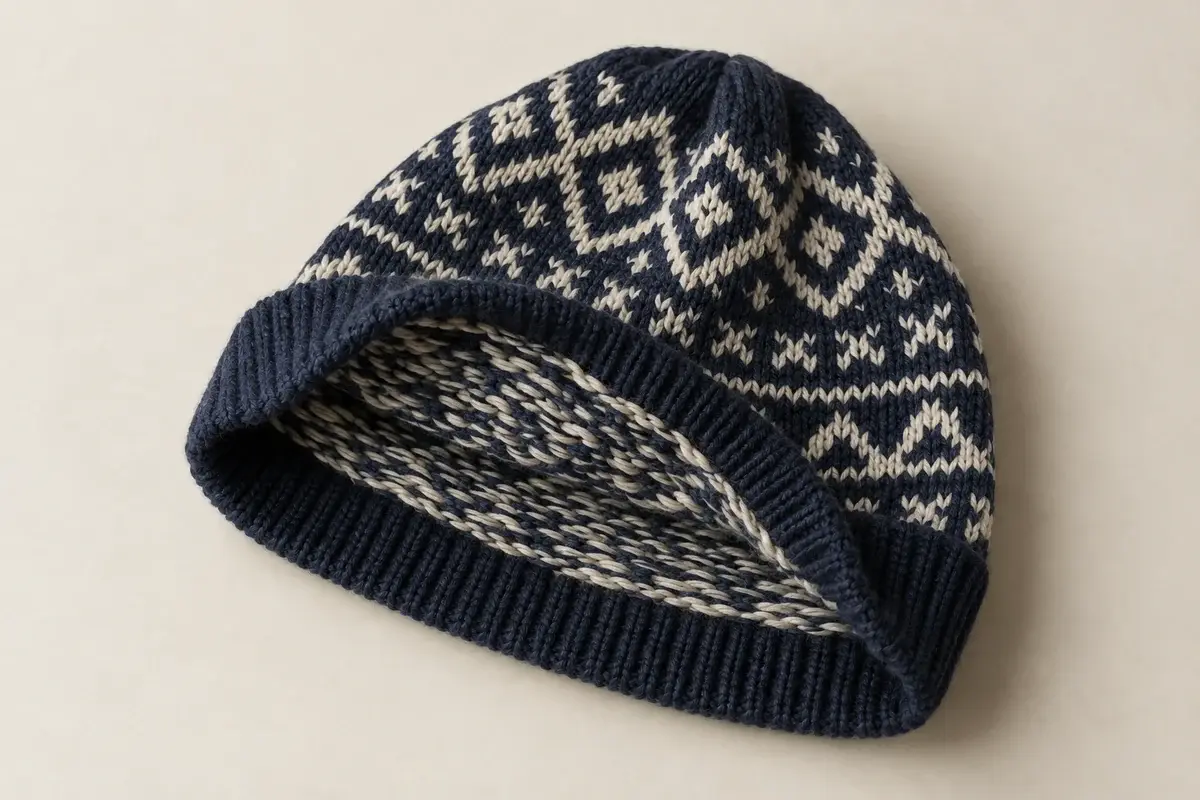
Shape and Inside Structure
Width, crown depth, cuff height and stretch can change the visible pattern. Review the inside yarn structure as part of the complete beanie.
- Record the finished measurements and the pattern position together.
- Check the yarns carried inside the beanie and their effect on its stretch and shape.
- Approve the full beanie, including shape, pattern, seams, labels, pom pom and packaging.
Approve the Pattern on a Real Beanie
The knit sample shows the design at final scale in the intended construction.
Send the Pattern Idea
Share artwork or a reference with the beanie shape you want. Add colors, pattern area and estimated quantity if known; we help confirm the other specifications.
Review the Knit Sample
Check the repeat, stitch detail, colors, placement and inside finish, then the dimensions, fit, seams and accessories. Samples normally take 5–7 days; a 3-day rush option costs extra.
Confirm the Production Reference
Approve the physical sample and final specification. Production checks compare yarn, density, tension, dimensions and pattern with the agreed reference.
Have a Pattern You Want to Knit?
Send the artwork or reference and tell us where you want it on the beanie. You do not need to choose a knitting gauge before contacting us.
Review My Jacquard PatternJacquard Beanie Questions
Pattern detail, repeats, yarn choices and sampling.