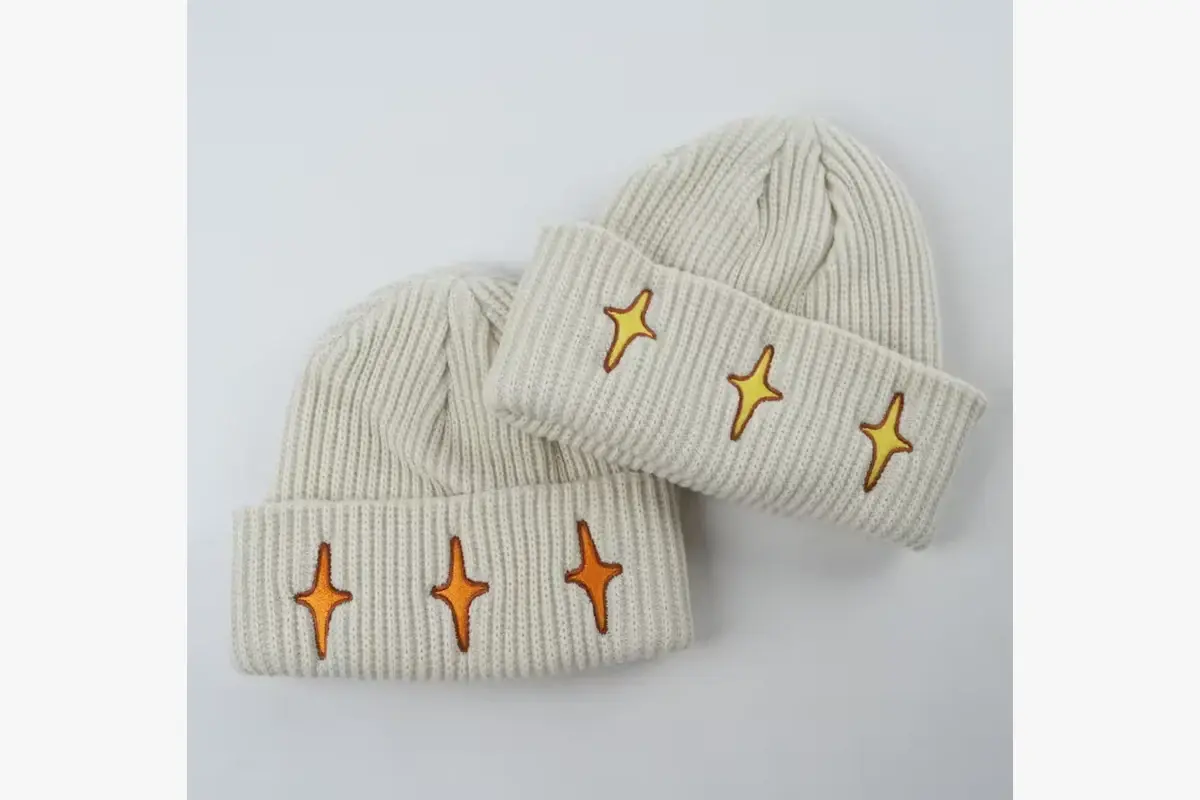
Direct embroidery stitches the design into the hat. A patch or woven label adds a separate branded piece. Either can work, depending on the artwork, knit surface and effect you want.
Mark lettering and other features that need to stay readable, and note what could be simplified. A simple emblem and a logo with small text place different demands on each method.
For embroidery, ask how the artwork will become stitches on the chosen knit. For a patch, review how the design will appear on the proposed material and how the component will be attached. A screen mockup can't settle either decision.
WiseBeanie's embroidery service and current patch options cover these discussions. The confirmed patch options are woven labels and leather patches, with details agreed by project. Send the logo with a hat reference to compare feasible methods before sampling.
The knit underneath matters
A deep rib, cable texture or folded cuff gives the decoration a different surface. Check whether the logo sits cleanly and whether the surrounding knit keeps its shape.
| Check | Direct embroidery | Patch or label |
|---|---|---|
| Appearance | Stitched design on the actual knit | Artwork on a separate surface |
| Flexibility | Local stiffness or knit distortion | Component stiffness and edge feel |
| Position | Full stitched area and reading direction | Full component size and attachment position |
Compare both methods against your artwork and chosen knit.
Decide what the logo must do at the finished size
If the design has a name and a small secondary line, decide whether both must be readable. Don't judge the method only on how well it reproduces the large emblem. Ask for the complete artwork at the intended size, then compare the difficult part.
For a direct-embroidery proposal, the review needs to show the stitches on the actual knit. For a woven-label proposal, it needs to show the produced label attached to the hat. A clear loose label and an embroidery simulation are not equivalent evidence of the finished result.
If the artwork cannot be reproduced as intended, ask for alternatives with the changes marked: a larger design, simplified detail, changed text arrangement or a different available method. Have the person responsible for the brand approve any artwork changes.
Compare the footprint, not just the printed graphic
A patch may need space for its border and attachment. Direct embroidery needs room for the finished stitch area. Comparing only the emblem width could lead you to approve decorations that occupy very different amounts of cuff.
Draw the full outer boundary of each option over the same cuff view. Check clearance above, below and at any nearby seam. Then ask whether the component sits within that area on the sample when the cuff is worn, rather than only when it is lying flat.
The inside view matters too. Record any backing, thread ends, attachment or label edge felt against the wearer. If one option is uncomfortable, identify the location. It may need a production adjustment rather than a wholesale switch in branding method, but that decision requires a revised sample.
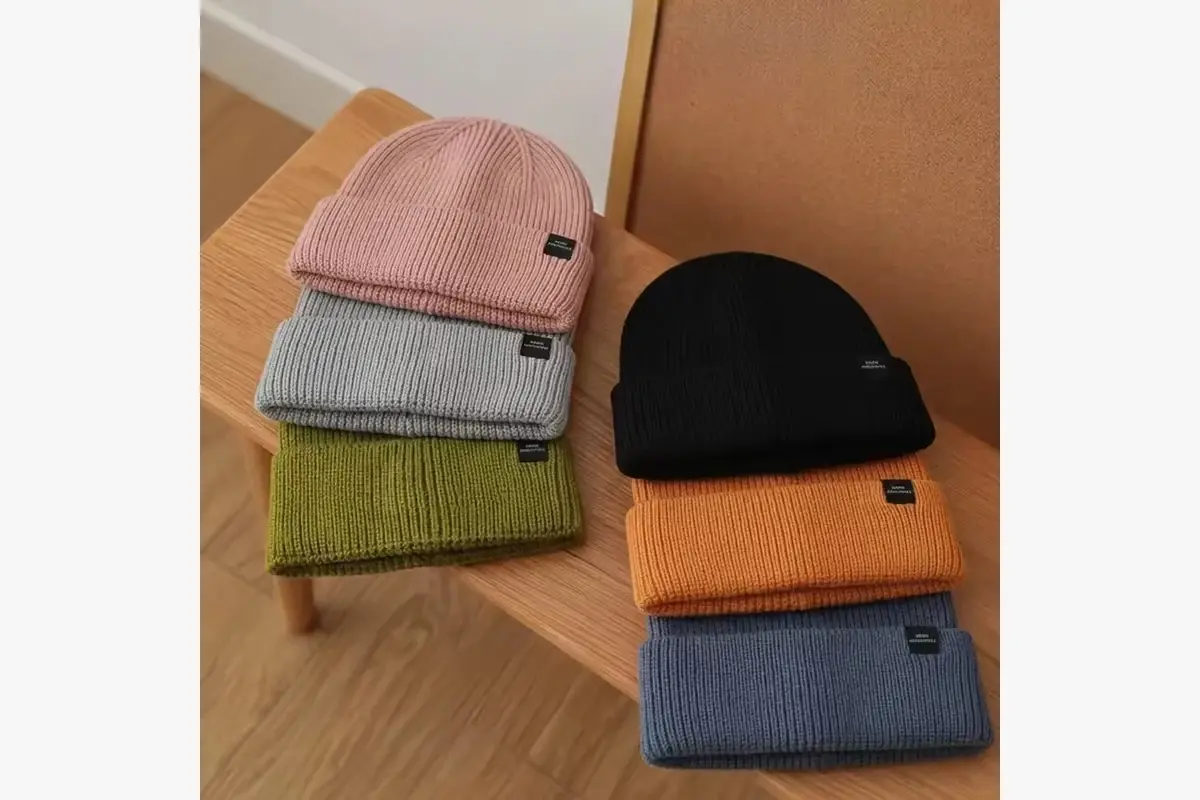
Make the cost comparison use the same design decision
Ask each quotation to identify the artwork version, finished dimensions and attachment scope. Note whether development is separate from the per-piece charge. A smaller simplified embroidery and a larger patch are different designs, even if the original logo file was the same.
Choose the method after comparing readability, fit on the cuff, inside comfort and the quotation for the approved specification. Use the sampled result and quoted scope to make that decision.
Compare them on the worn hat
Where practical, use the same hat construction and a similar visual logo scale. Fold the cuff as intended and look from normal viewing distance. Feel the inside for uncomfortable backing, attachment points or label edges.
Run the agreed fitting check, then check the stretched logo and whether its lettering stays readable in the intended wearing position.
Once chosen, record the method, artwork revision, finished dimensions, colors and position. Add material, edge finish and attachment for a patch. For embroidery, keep the approved stitched sample linked to the actual hat construction so the approval covers the combination you tested.
Related Guides and Factory Options
- How to Prepare Beanie Embroidery Artwork
- Review custom production options
- How Sampling and Production Work
Send your artwork, approximate logo dimensions and preferred position. We will review the design against the chosen knit and discuss a sample.
Review Your Logo Artwork