
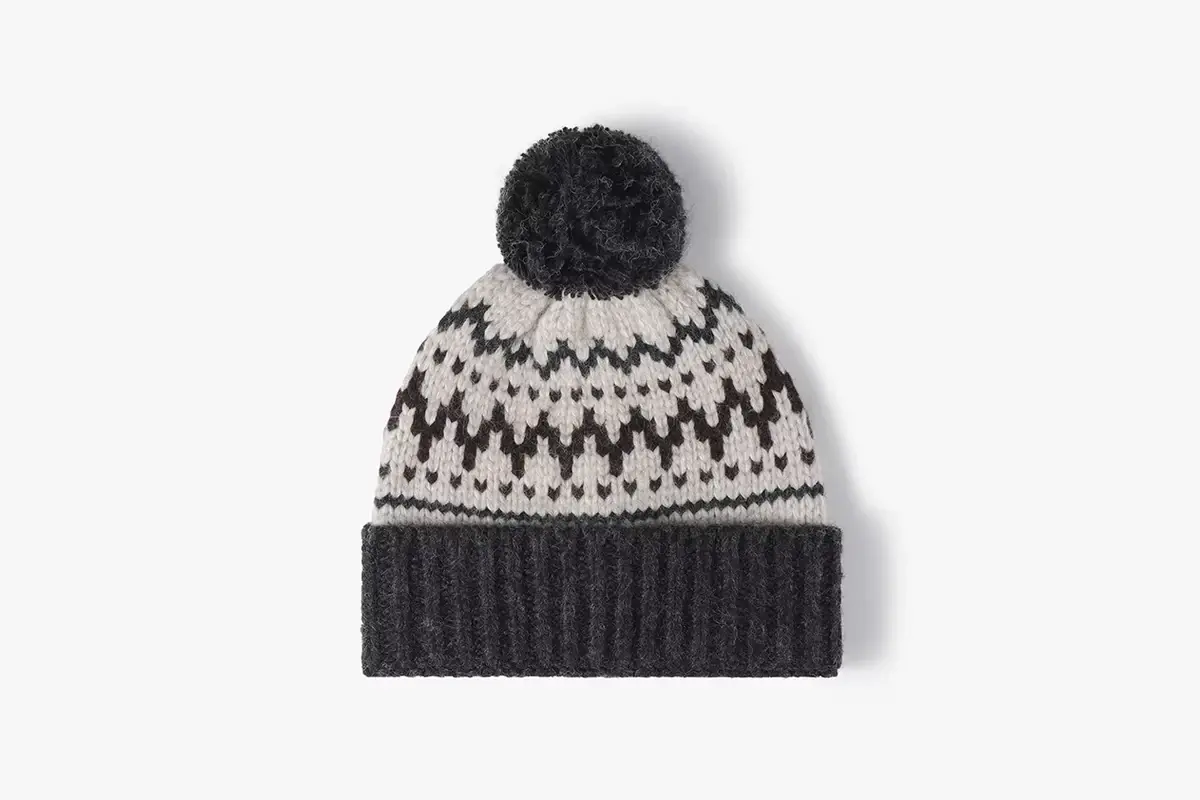
Both techniques create color designs within the knit. Ask how your design will translate into the chosen yarn, gauge and hat shape before deciding on the technique by name.
Repeats, lettering and blocks of color
Jacquard is commonly considered for repeated patterns and multi-color motifs. Intarsia is commonly considered for distinct color areas. These are starting points, not fixed rules for every design.
The techniques can also be combined. STOLL documents jacquard within intarsia areas. This example doesn't identify the machinery used for a particular WiseBeanie order.
You can review WiseBeanie's jacquard and intarsia options, then submit the artwork to discuss an approach suited to its layout.
What happens when the artwork becomes stitches?
Fine lines and gradients in a printed image don't transfer directly into a knitted grid. Show the artwork at its intended scale, identify the shapes, letters and color boundaries that matter, and ask to see how they'll be adapted.
Check the motif both flat and stretched around the head. A clear design on the table can change when worn.
The whole pattern also needs a position on the hat. Look at the repeat around the body, the joins between color areas and the way the motif finishes near the crown. Approving a flat image doesn't decide where those features land after shaping and folding.
A flat artwork needs a start point on the hat
For a repeated motif, mark where the first complete repeat should appear on the front. Show how it continues toward the side and back. Ask where the repeat meets and what the join will look like. A pattern that repeats neatly across a rectangular image may still need adjustment to fit the actual knitted body.
For a large isolated graphic, identify its center and its relationship to the cuff and crown. If the design is meant to appear only on the front, make that explicit rather than allowing it to be interpreted as an all-around pattern.
On a development drawing, mark what must stay unchanged, where a repeat may be adjusted, and where important lettering must not be lost. Ask the factory which details need adjustment for the selected yarn and gauge.
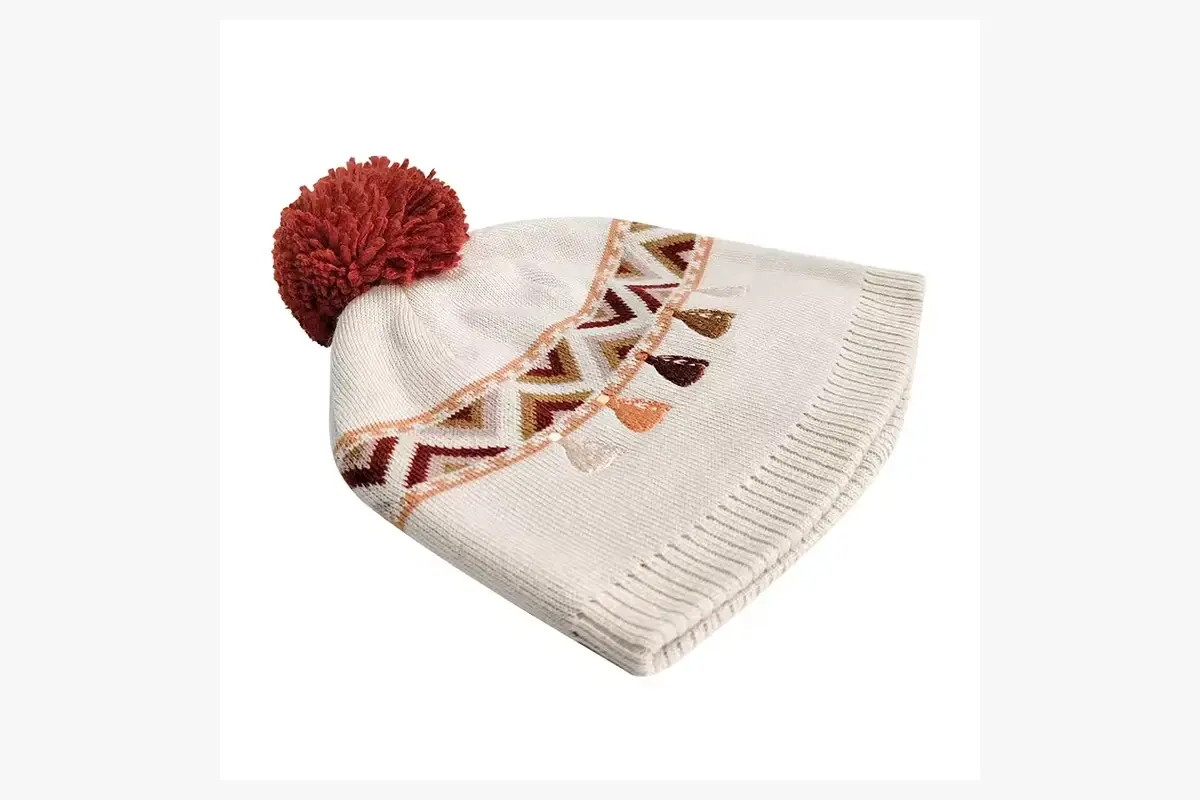
Review a stitch interpretation before relying on the mockup
Ask how small letters, diagonal edges and narrow color gaps will be represented in the selected construction. Check these details at actual scale, not just in an enlarged digital preview. A large on-screen view can make a simplified shape look clearer than it will on the hat.
If the factory proposes removing a fine outline or changing a color boundary, compare the proposed artwork side by side with your original. Decide whether the difference is acceptable before treating the revised version as approved. Keep the accepted interpretation with the sample record so production knows which image to follow.
A knitted development panel can help answer a pattern question, but its approval doesn't settle the finished crown, cuff fold or wearing stretch. Specify what the panel approves and what still requires a complete sample.
Review pattern, position and stretch
On the finished hat, read any text, locate the front motif and inspect the repeat join. Then wear it and repeat the check. Record whether a changed appearance comes from the pattern itself, its placement or the way the hat is being stretched and folded.
If a revision is needed, name that issue. Moving a motif is a different request from changing its proportions; changing the repeat is different from changing the color. Record each requested change so you can check it on the next sample.
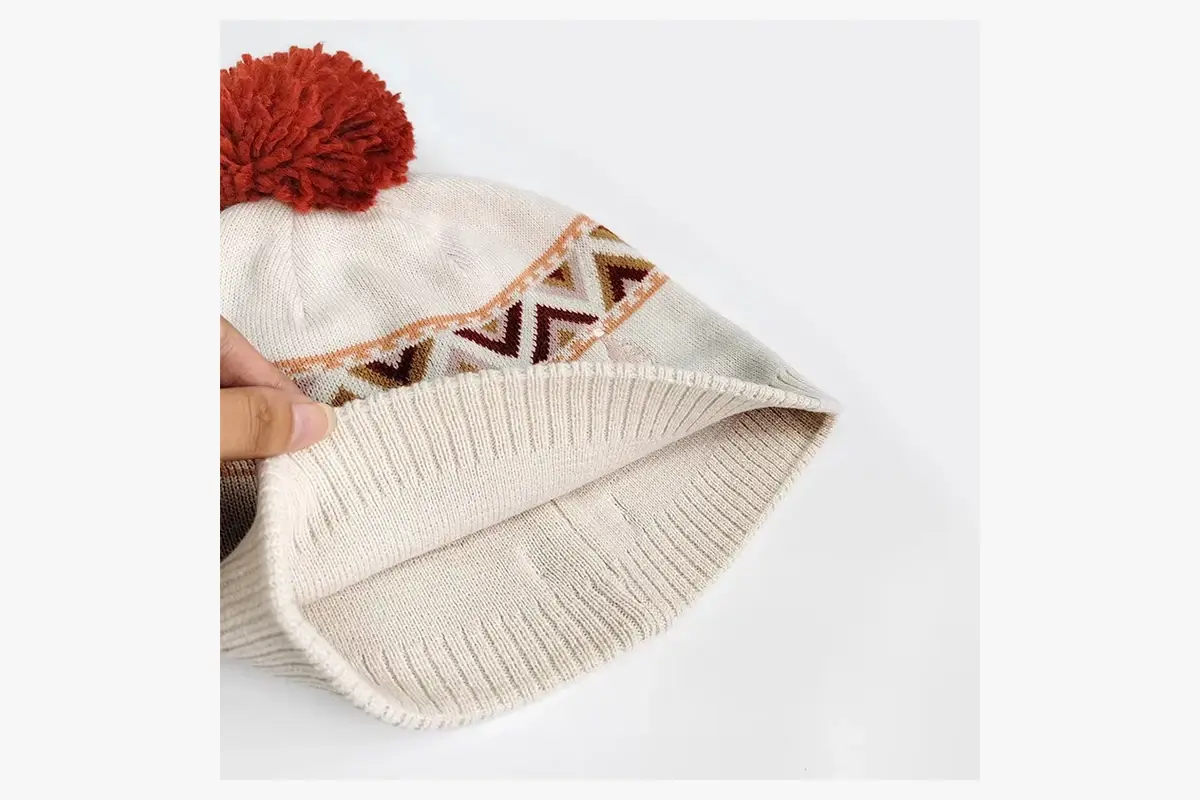
Look inside before approving
Ask for an inside view and an explanation of the backing, joins and any carried yarns. Not every jacquard has the same reverse, nor does every intarsia have identical internal construction.
Check thickness, stretch and comfort, particularly at the forehead and near large color transitions around the opening. The inside needs to suit wear as well as the outside suits the design.
Keep a record of the front orientation, pattern start, cuff fold and relationship to seams. The completed sample should settle both the knitting method and the placement: readable motifs at the finished size, acceptable joins, a repeat that meets as intended and the approved crown pattern.
Related Guides and Factory Options
- Rib, Cable and Waffle Knit Beanies Compared
- Review custom production options
- How Sampling and Production Work
Send your artwork, color references and preferred beanie shape. Our factory can assess the pattern layout and the details to confirm in a knitted sample.
Discuss Your Knitted Artwork