
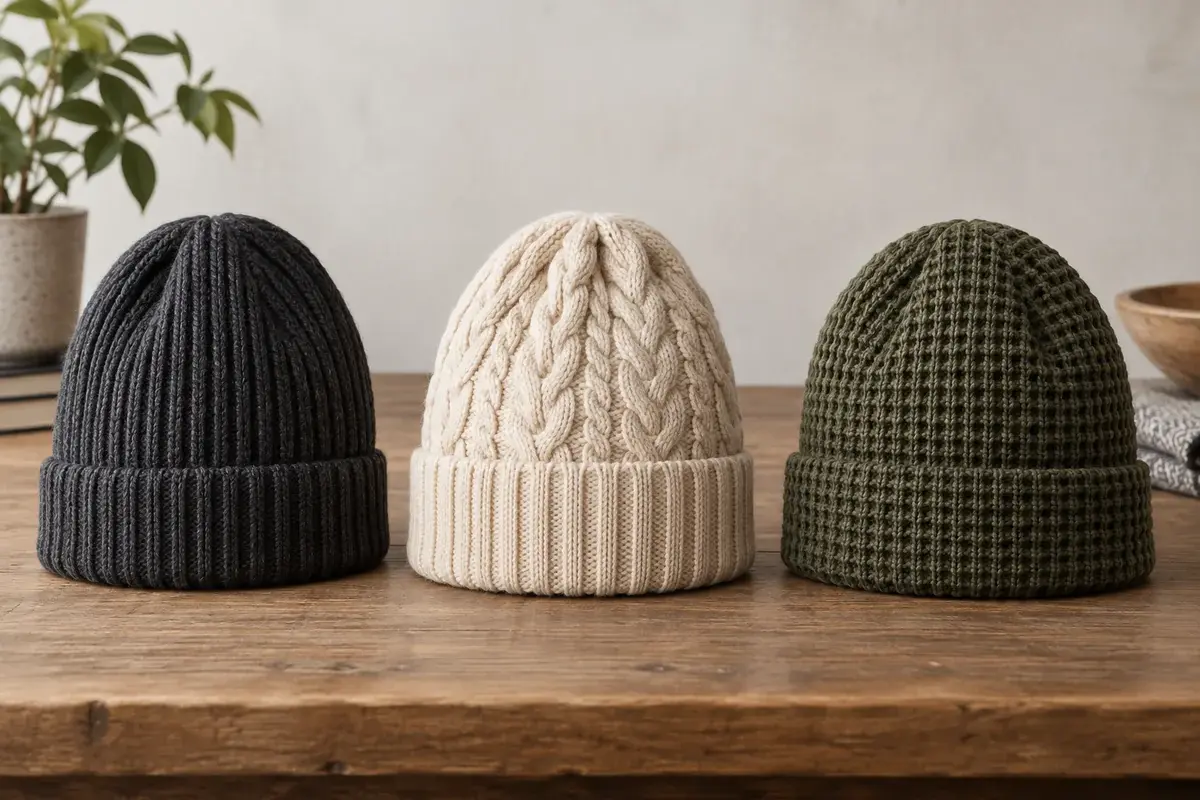
Rib gives a repeated vertical structure. Cable creates crossed or twisting forms. Waffle has a recessed, grid-like surface. Each can be made at different scales and with different yarns, so the texture name alone is not a complete design instruction.
How large should the repeat be?
A fine rib doesn't look like a broad rib; a narrow cable repeat doesn't look like a large cable panel. Waffle can vary from a small texture to a deeper, larger grid.
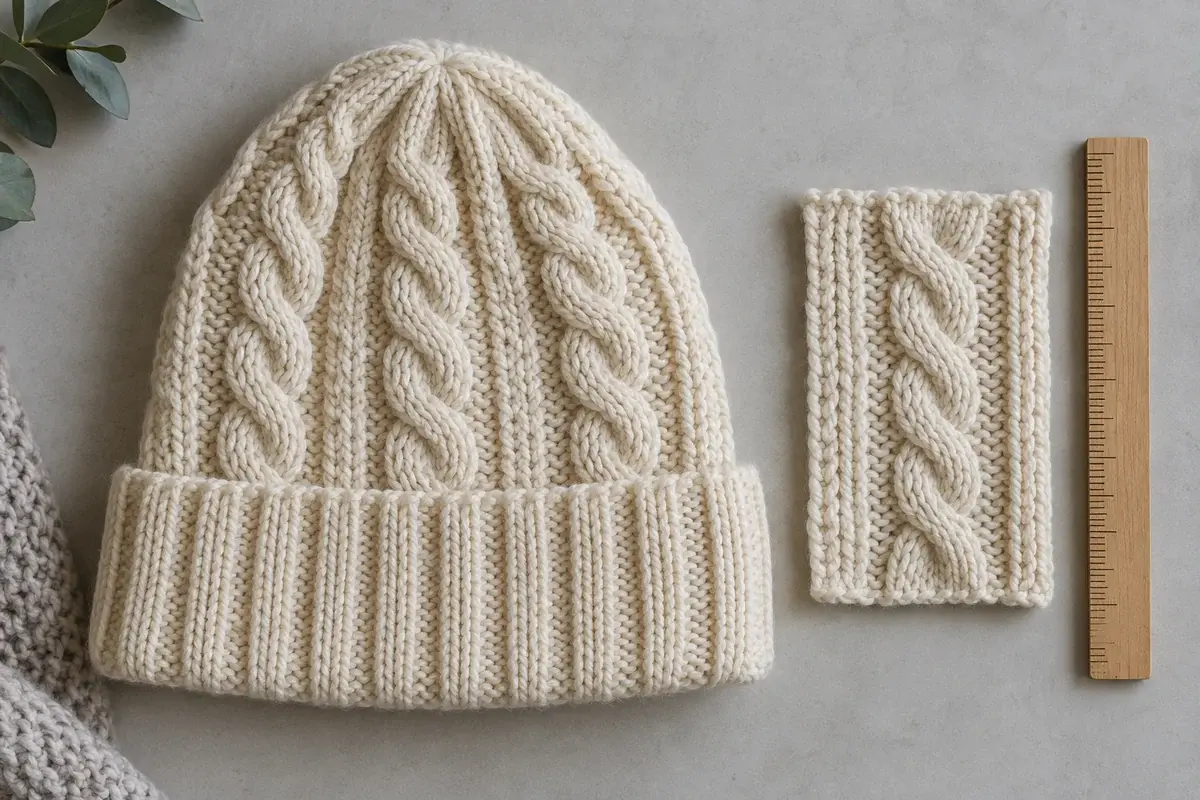
Send a full-hat reference and a detail view. Mark whether you want that exact repeat or a similar visual direction. The full photo alone may not show enough for the factory to interpret the structure.
WiseBeanie's ribbed cuffed, cable-knit slouchy and waffle-knit fisherman designs are useful references. Their shapes differ too; separate your texture preference from your preferred fit.
Follow the pattern to the cuff and crown
Some hats use a different texture on the cuff. Others carry the body pattern through it. Show any transition in the drawing and review it with the cuff folded as intended.
Check how the structure meets near the top. A flat panel's middle section doesn't show how the finished crown will look.
| Texture | Details worth checking |
|---|---|
| Rib | Column width, spacing, cuff alignment and appearance when stretched |
| Cable | Repeat size, panel position and finish at the crown |
| Waffle | Cell scale, depth and consistency across the surface |
Support those descriptions with a reference sample and agreed construction.
Give the factory a repeat it can identify
When you mark a texture reference, show where one visible repeat begins and ends. For rib, identify the columns and spacing you mean. For cable, mark the panel and its relationship to neighboring areas. For waffle, show the cell size and the depth you want the sample to resemble.
Include a ruler or another agreed scale reference in the close-up where practical. Without scale, a large texture photographed from farther away can resemble a smaller one photographed close. Keep the full-hat view alongside it to show how the detail fits the silhouette.
Mark the visual features that matter and ask the factory to propose the construction. If the proposal differs from the reference, have those differences identified before treating the image as reproduced exactly.
Evaluate a swatch for the question it can answer
A development swatch may help with texture scale, yarn appearance and pattern definition. It doesn't settle the finished crown or prove how the cuff will look after folding. Record what you accept from the swatch and what still needs review on the complete beanie sample.
If two swatches use different yarns, colors or thicknesses, list those differences. You may prefer one overall, but the comparison won't tell you the effect of texture alone. When the decision is specifically about the knit pattern, ask which other features can be kept comparable.
Inspect the texture under ordinary viewing conditions as well as in a close-up. A detail that looks pronounced in strong side lighting may read differently in normal product photography or on the wearer. Keep a reference photo under the agreed review lighting.
Check the cuff, seams and crown
The most useful sample photos include the join between cuff and body, the side or back seam area and the crown. These show how the texture looks on a complete hat. Ask whether a visible change is intentional and record the accepted result.
For a revision, name the part of the texture you want changed. “A smaller cable repeat across the body, with the approved cuff texture retained” is more informative than “make the knit finer.” The latter could mean a change to yarn, gauge, pattern scale or overall feel.
If the factory proposes more than one change to achieve the look, compare the complete revised sample. Update the specification and sample reference together when the construction changes.
Put the actual logo on the sample
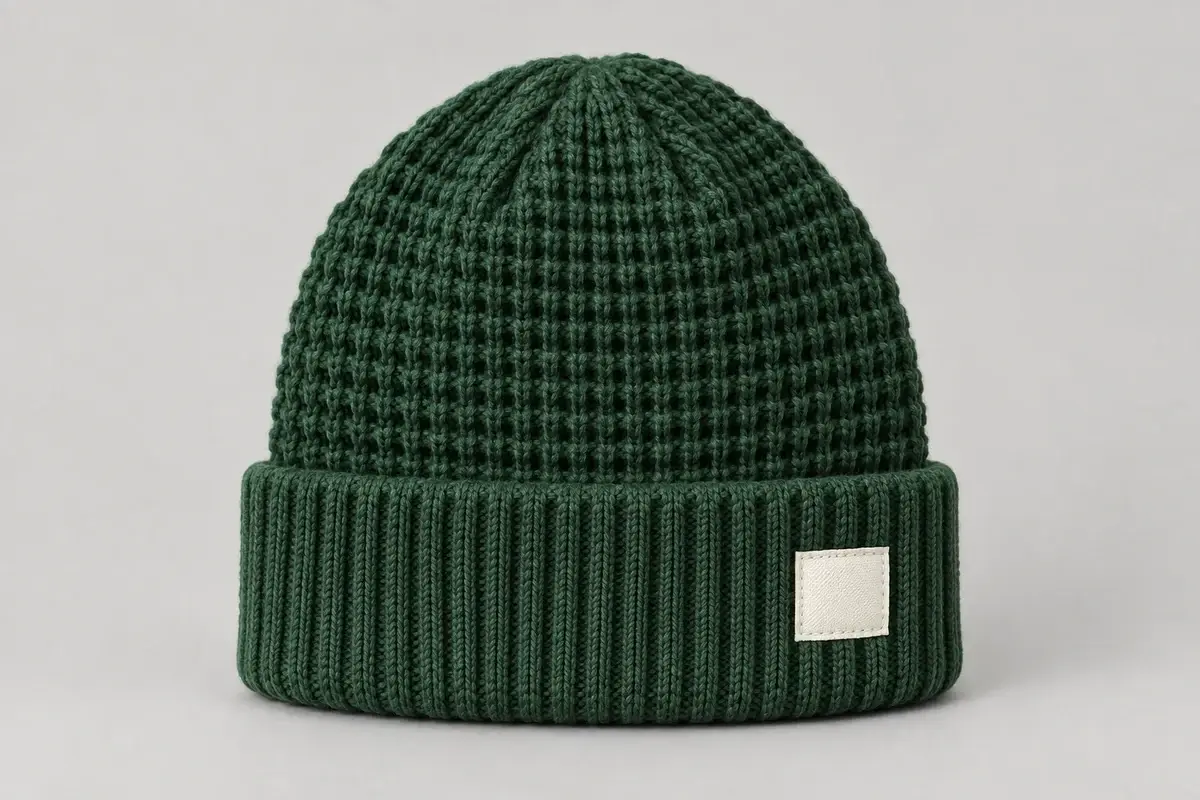
Raised texture can interfere visually with small lettering or a patch edge. Check the decoration from normal viewing distance. If the factory proposes a plainer panel or different cuff texture behind it, approve that change explicitly; it can alter the design even with the same yarn and logo.
Texture also isn't a warmth rating. A chunky appearance doesn't establish thermal performance, and a fine knit isn't automatically lightweight. Consider weight, layers, material and construction together, with suitable evidence for any performance claims.
Compare samples in similar light and on the same wearer. Keep both a texture close-up and a full front view with the final specification so the approval records the detail and the overall result.
Related Guides and Factory Options
- Jacquard vs Intarsia for Beanie Designs
- Review custom production options
- How Sampling and Production Work
Send a close-up and full view of your preferred texture, plus your logo and beanie shape. We will review the repeat and construction for sampling.
Discuss Knitting Options