
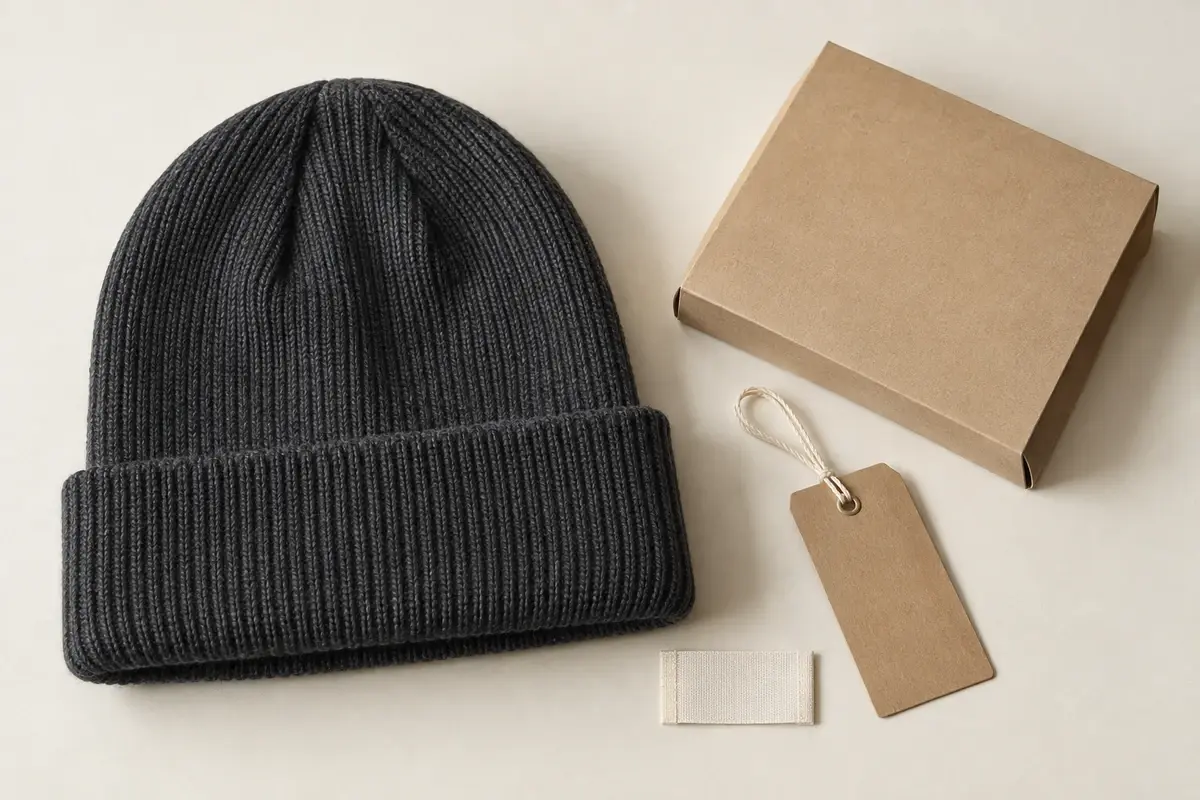
What role will this hat play in the range?
A branded staple, a textured seasonal piece and a short fisherman shape serve different design ideas. Choose the fit and material for the customer who will wear it, then decide where the branding belongs.
Look at the whole hat at actual size. A front logo, side label and large hangtag may compete for attention. You don't need every available decoration method on the same hat.
Keep the brand files together
Send the current logo, color references and approved wording, with a note about what must remain unchanged and what may be adapted for production. Clear filenames and revision dates make those instructions easier to follow.
Packaging and embroidery may require different production files. They should still use the same approved version of the brand artwork.
WiseBeanie's label and packaging options can be considered alongside the hat, rather than after it. Each component needs its own decisions:
- Exterior branding: technique, size and position on the worn hat.
- Main label: brand identity, dimensions and attachment.
- Information label: verified product details, care information and market requirements.
- Hangtag: message, identification and attachment.
- Packaging: protection, presentation and retail handling.
Check information-label content against the actual composition and destination market. A brand logo doesn't replace product information your sales channel requires.
Give each retail variation an identity
Before building artwork for a range, decide how your team will identify each sellable variation. One style in several colors may need different item records even when the logo and main label are shared. If you add sizes, include those in the product-data file as well.
A simple internal matrix can connect the product to its components:
| Variation | Hat details | Shared components | Variation-specific information |
|---|---|---|---|
| Style A, black | Approved construction and fit | Brand logo and main-label design | Color identification and buyer-assigned item data |
| Style A, navy | Same approved construction and fit | Brand logo and main-label design | Different color identification and item data |
Use your retail system's identifiers in this example layout and send the approved item data to the factory.
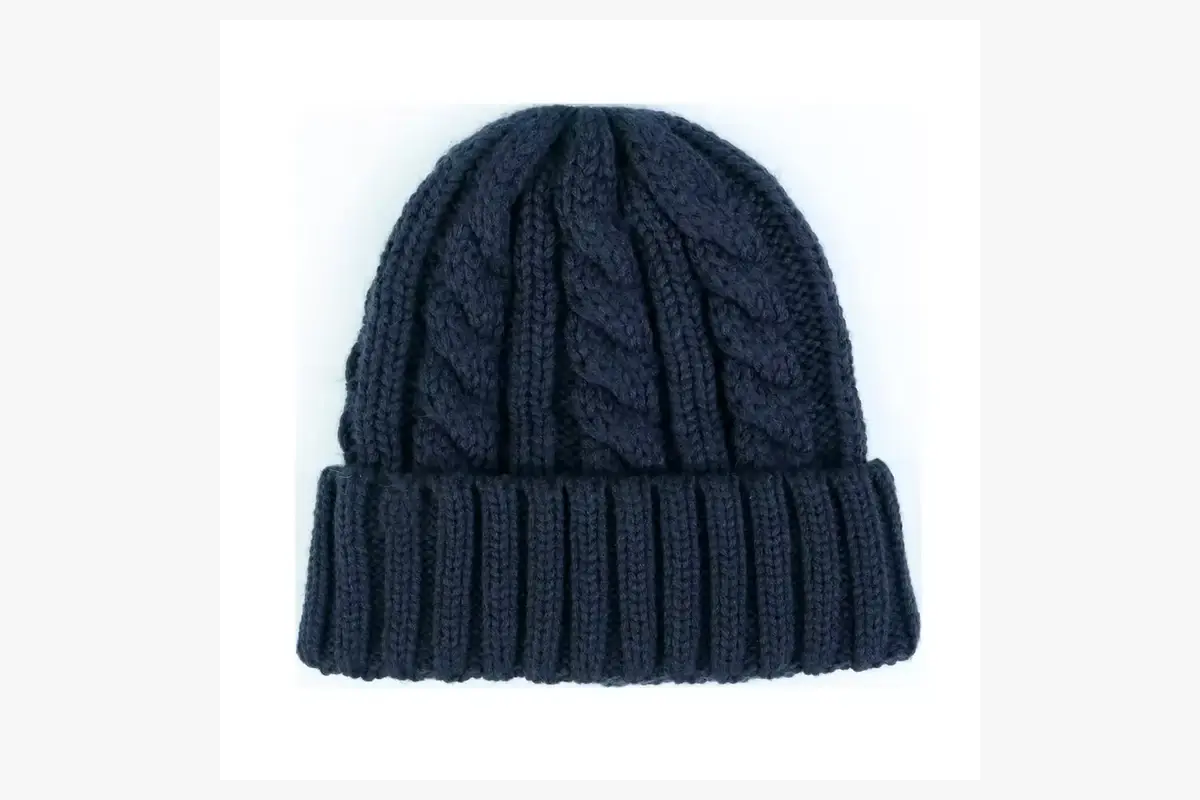
Choose the main design feature
Write a plain sentence describing why the customer would choose the hat: the short fit, a particular texture or a defined branded look, for example. Then check whether the material, decoration and presentation support that same idea.
If the key feature is a visible knit texture, covering most of it with a large patch may undermine the design. If the logo must be the focus, ask whether the selected texture lets it read clearly. Keep decoration proportionate to that main feature.
For the first range, separate essentials from additions you would merely like to try. Have the essentials quoted and sampled as a complete product. Review optional variations separately to keep the main approval clear.
Decide who owns the final brand decisions
If a designer, buyer and warehouse team all supply instructions, assign one person to consolidate the final versions. A factory shouldn't have to choose between the designer's new hangtag and the buyer's older approved attachment.
Keep a short release record showing the approved logo file, product text, packaging and item data. Ask team members to check the parts they know: the designer reviews the artwork, the buyer the assortment, and the receiving team the identification and packing. Combine those answers in one final instruction without leaving competing versions active.
Save the release record with the first order for use when reviewing reorders.
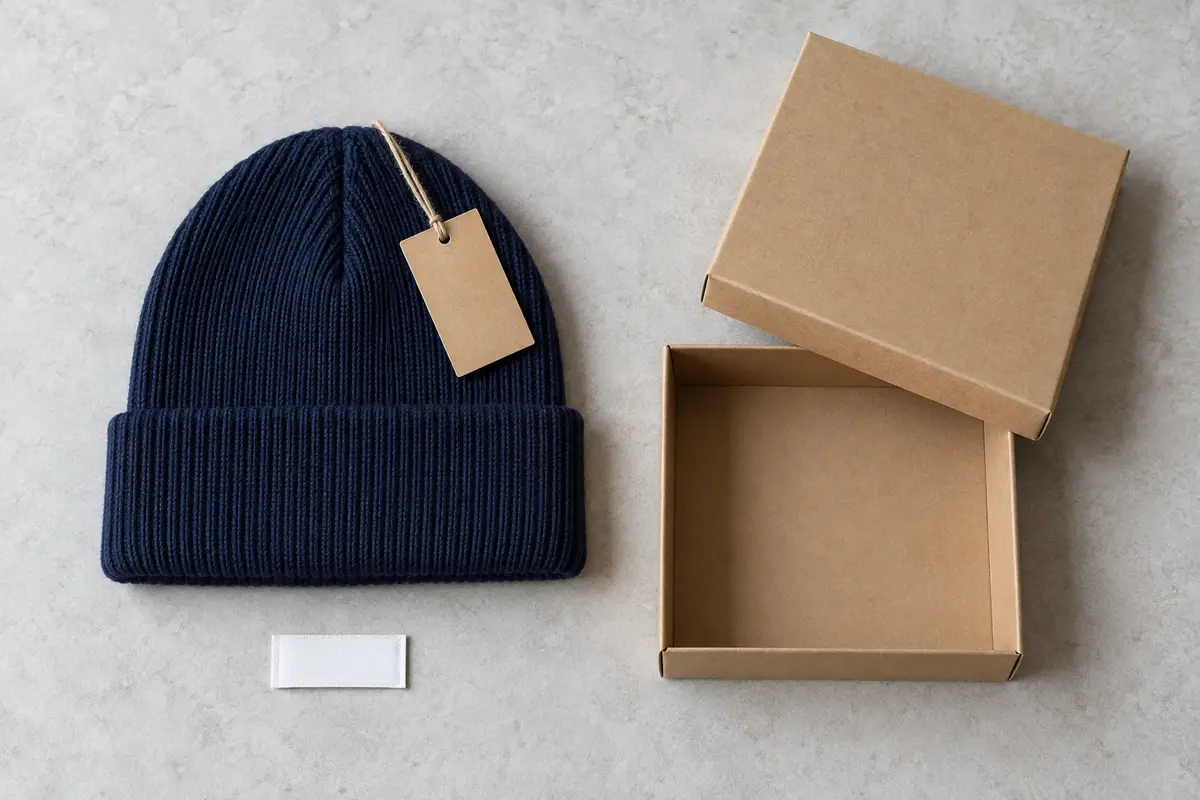
Approve the hat as the customer will receive it
Where feasible, review the sample with its labels and packaging. Feel the inner label, check that the hangtag attachment doesn't damage the knit, and look at the folded product in its pack.
If a component isn't ready for that sample, record how it will be approved separately. Approval of a plain hat shouldn't accidentally become approval of packaging nobody has seen.
Send the brand files you already have and identify the components you need help specifying. Once they're agreed, save the final specification, artwork, sample photos, label text and packaging details with the actual color and size quantities ordered. That file will be far more useful for a reorder than trying to reconstruct the decisions from old messages.
Related Guides and Factory Options
- What to Include in a Beanie Label and Hangtag Brief
- Review custom production options
- How Sampling and Production Work
Share the brand files and style references you have. We can discuss the hat, labels, hangtags and packaging as one custom project.
Discuss Private Label Options