
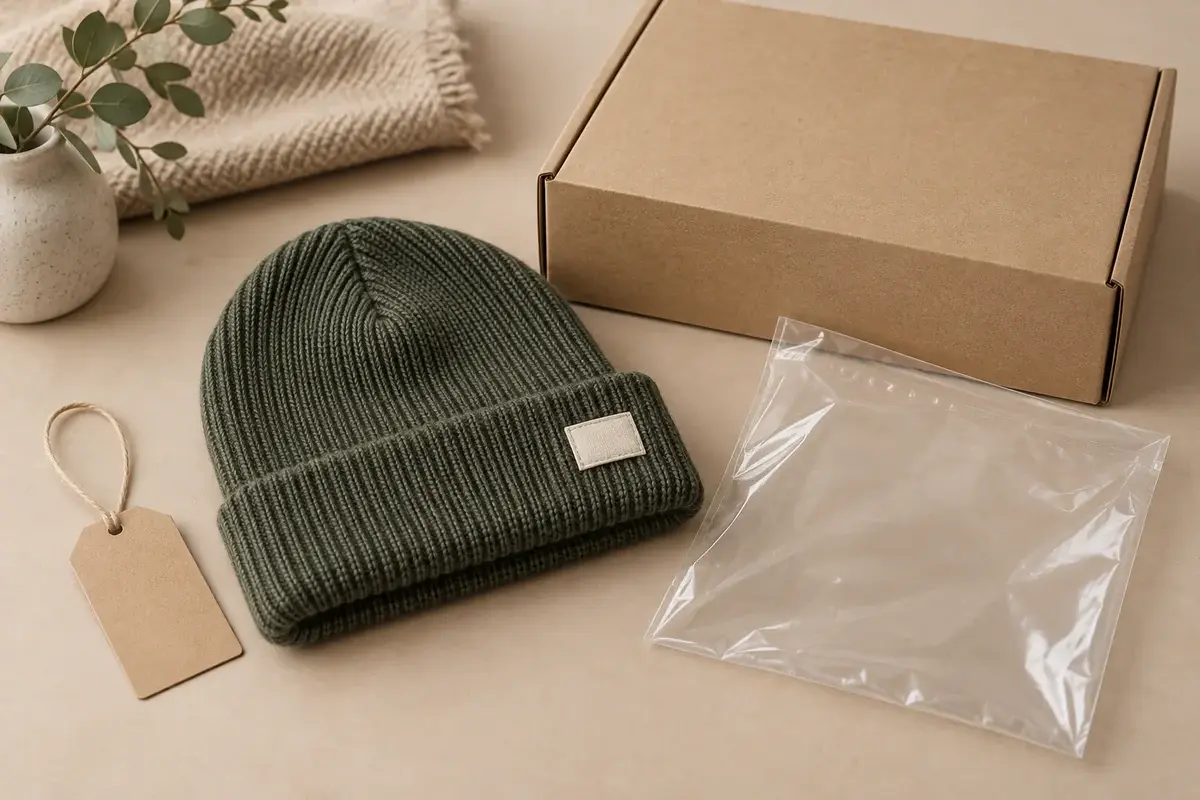
Store displays, online fulfillment and promotional handouts may require different arrangements. Describe yours in the brief, including how the hat must arrive and be identified.
Get the receiving instructions
Ask for the current document if one exists. Check individual packing, color and size identification, and whether cartons should contain one variation or a defined assortment. A summary from memory may miss a label position or carton detail the receiving team relies on.
You can send those requirements to WiseBeanie with the product specification. Its labels and packaging page covers options to discuss, including individual PE bags, kraft paper bags, custom paper boxes and biodegradable-bag options. Materials, printing and quantities are confirmed by project. Environmental wording needs evidence for the actual packaging supplied; the category name alone doesn't support a finished-product claim.
Pack the complete hat
Include the pom pom, patch and hangtag when checking package dimensions. Record how the hat is folded and whether the branding faces out. Test the closure on the packed sample instead of approving an empty bag or box.
Then open it. Look for cuff or crown creases, a compressed pom, or a hangtag marking the knit. Repack it from the written instructions to check whether somebody else can reproduce the arrangement.
For any required shipping or retailer test, agree the test method and acceptance criteria separately from the presentation review.
Write a packing sequence someone can follow
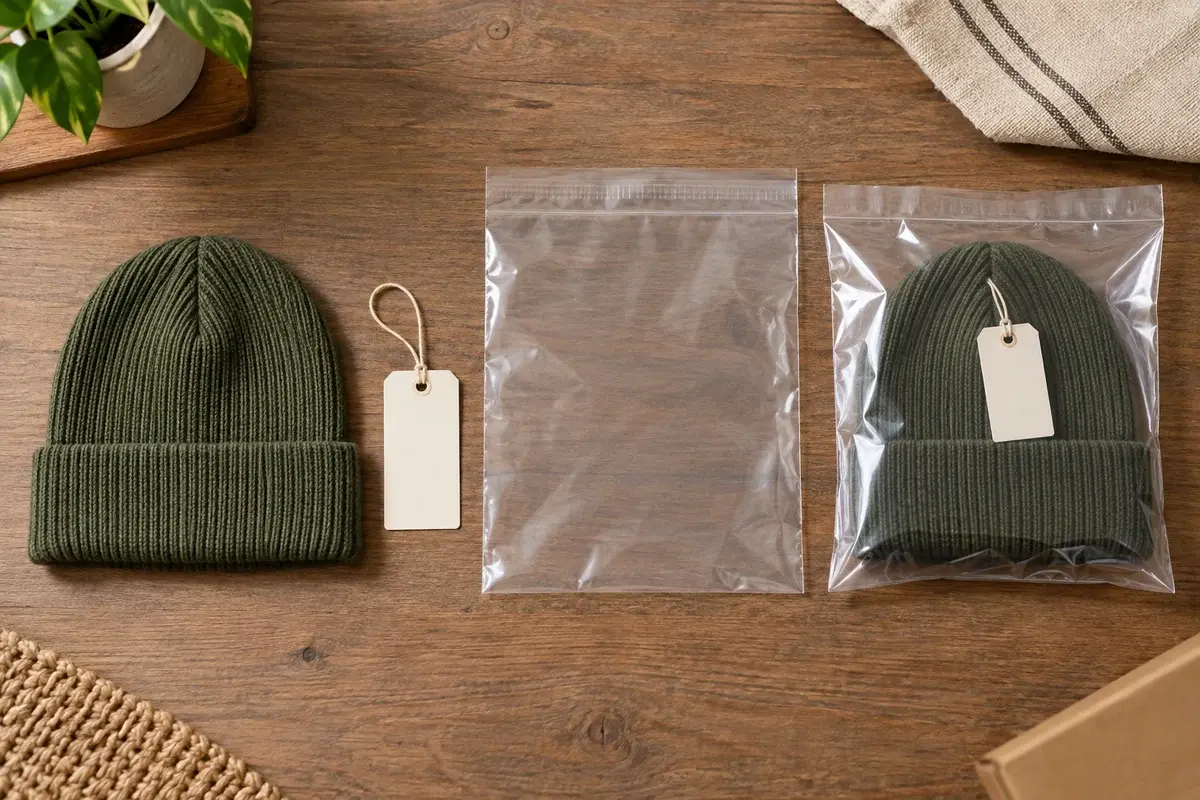
Describe the approved order of work: how the hat is folded, which face is visible, where the hangtag sits, how the individual pack closes and how items are grouped. Use photographs of the real sample with the instructions, rather than an empty packaging mockup alone.
If a label must remain visible through a bag or face a particular direction, show that. If the hat has a pom, check that the approved fold leaves the trim in the intended position. Include those positions in the packing photos.
Have a reviewer repack the sample using only the written sequence and images. Clarify any unanswered steps before bulk packing.
Make the carton quantities reconcile
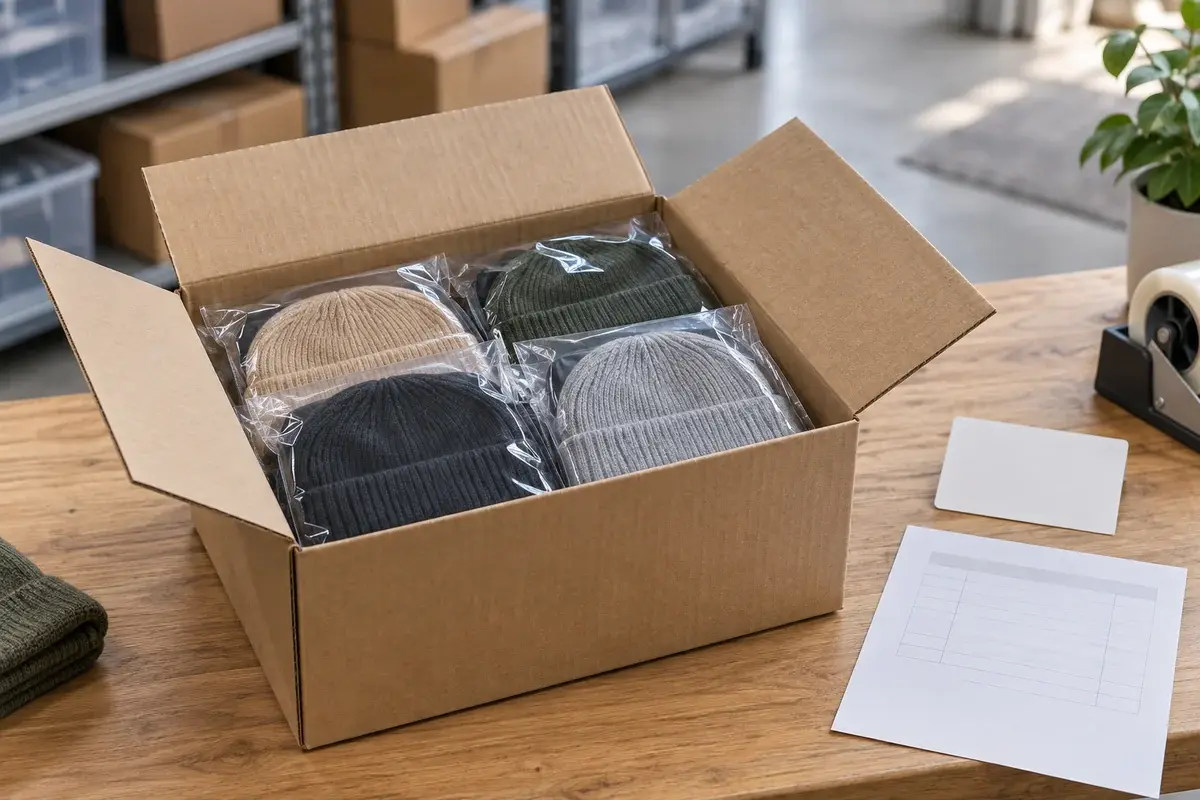
For an illustrative order of 240 hats, packing 40 hats into each carton would produce six cartons. If the assortment were 120 black and 120 navy hats with single-color cartons, that plan would use three cartons per color. These numbers are only an example; carton capacity and the actual assortment need project confirmation.
The order, carton labels and packing list should agree. If one carton contains a different quantity or a mixed assortment, identify it rather than copying the same label onto every box. A packing list that totals correctly can still conceal a wrong color split.
| Record | What should agree |
|---|---|
| Purchase order | Approved total and variation quantities |
| Carton contents | Actual pieces and variations in each carton |
| Carton identification | Description of those contents |
| Packing list | Shipment total derived from the cartons actually packed |
Confirm packaging changes before assuming freight is unchanged
A move from a bag to a box, or a different packing arrangement, may change the shipment's packed dimensions and weight. Ask for revised packing details and a transport quotation where relevant instead of assuming the old estimate still applies.
Separate packaging designed for retail display from packaging needed for the agreed shipping route. An attractive individual box doesn't by itself establish how the full order should be protected in transport. If a retailer or carrier has particular requirements, include them in the review and agree any required testing before release.
Follow the identification through to the carton
| Level | Check |
|---|---|
| Hat | Correct style, color, size and labels |
| Individual pack | Matching identification and approved barcode, if required |
| Inner grouping | Quantity and assortment |
| Outer carton | Contents, carton number and handling information |
| Packing list | Quantities matching the packed shipment |
Use buyer-approved barcode data and review the printed result where codes are required. Check that the printed barcode identifies the correct item and meets the retailer's requirements.
Keep photos of the folded hat, closed pack and carton arrangement with the packaging dimensions and artwork revision. Identify buyer-supplied labels and data files. Settle changes to boxes or hangtags before release, since they can affect cost and timing as well as presentation.
Related Guides and Factory Options
- What to Include in a Beanie Label and Hangtag Brief
- Review custom production options
- How Sampling and Production Work
Share the receiving instructions, label artwork and proposed packing arrangement. We can review materials and dimensions for the complete hat.
Discuss Packaging Options