
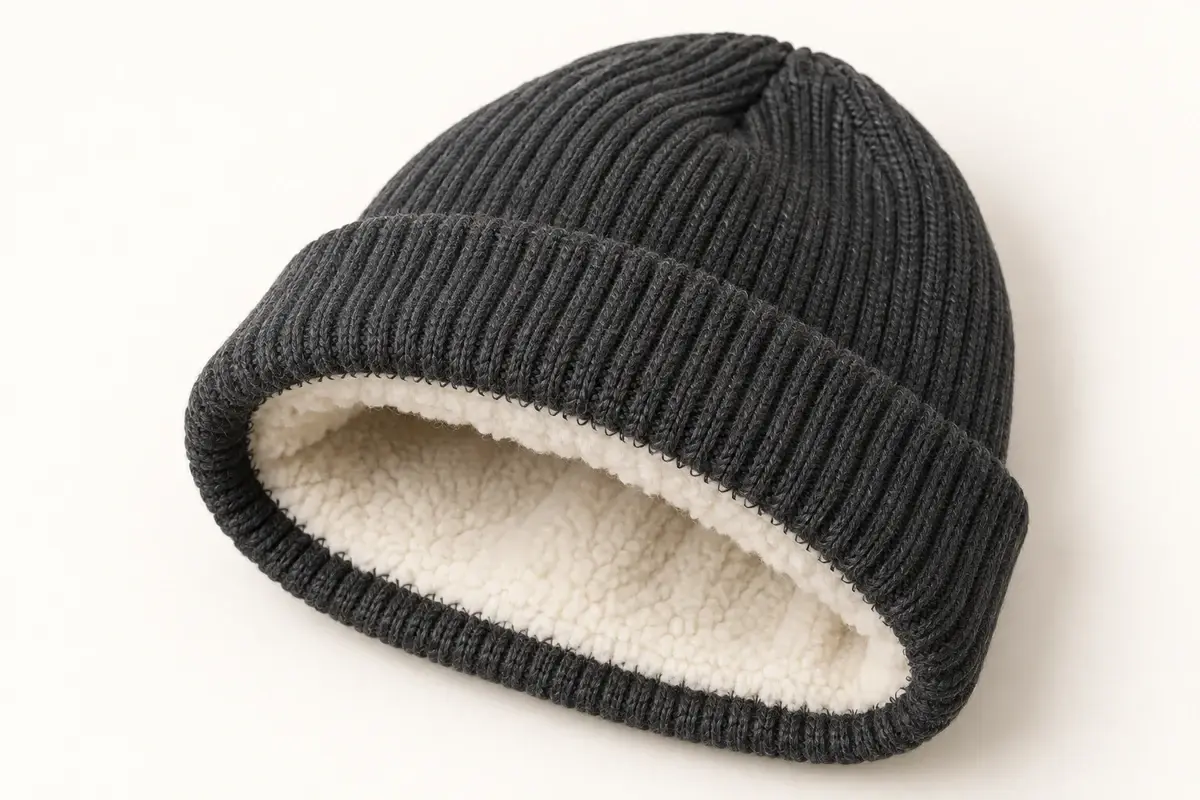
A fleece-lined hat has a fleece component inside it. Double-layer describes a body made with two layers. Neither term gives a fixed warmth rating, and the specification still needs to explain exactly how the hat is built.
What's inside each proposal?
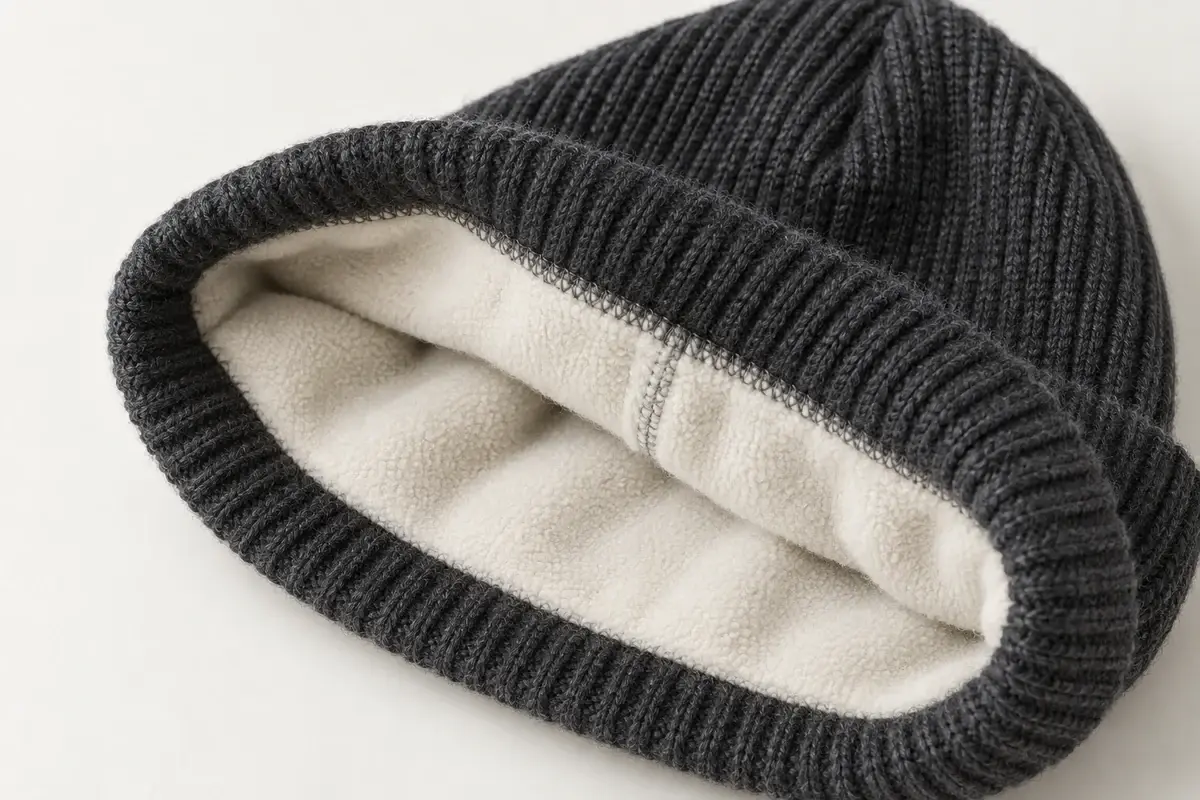
For fleece lining, check the material, coverage and attachment. Does it cover the entire inside or only part? Check the joins and where the lining sits beneath the cuff.
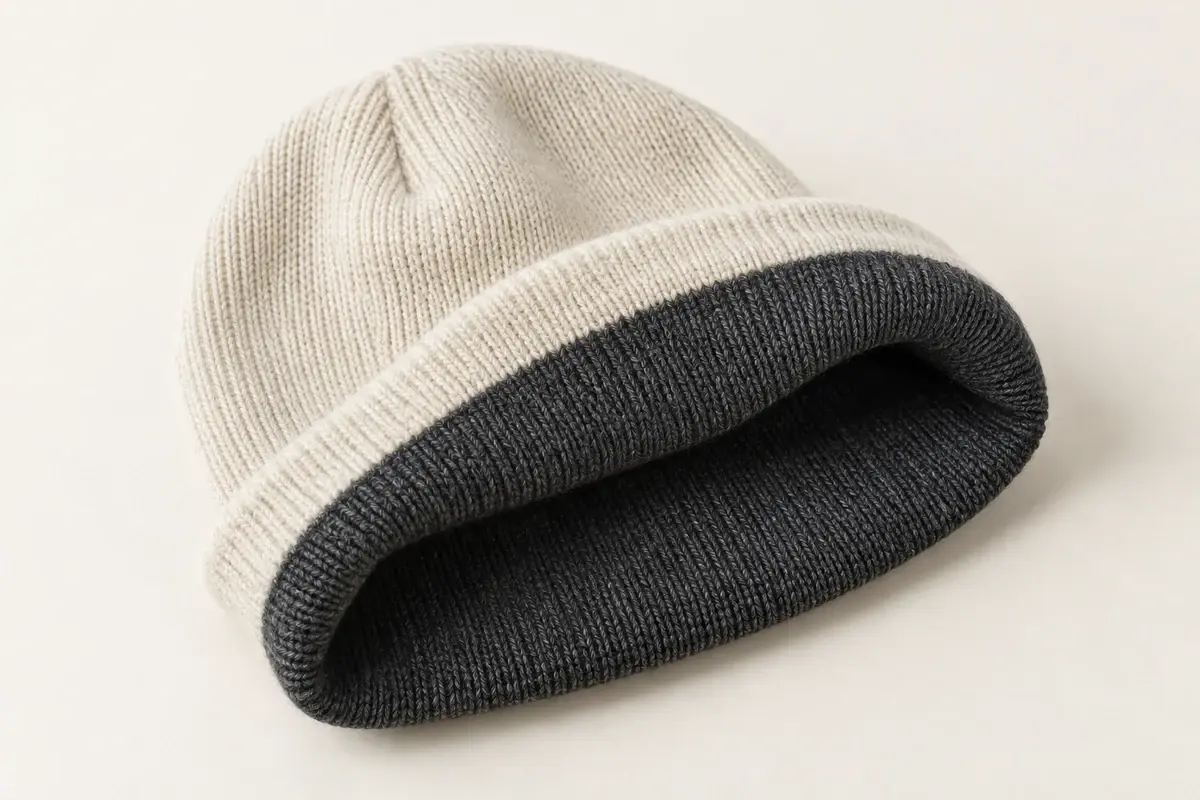
For a double-layer knit, ask how the layers are formed and connected. Name the inner and outer yarns if they differ. A folded cuff adds thickness locally, but that doesn't make the whole body double-layered.
| Feature | Fleece-lined | Double-layer |
|---|---|---|
| Inner surface | Fleece material and coverage | Inner knit and yarn |
| Layers | Lining size and attachment | Connections and movement between layers |
| Opening | Pressure with the lining in place | Combined stretch of both layers |
| Seams | Lining and body joins | Crown and layer connections |
| Care | All materials and decoration | Both yarns and the construction |
WiseBeanie's fleece-lined cuffed and double-layer cuffless styles are starting points for comparing these constructions. Ask for the inner and outer construction details when deciding which to sample.
Try the finished construction on
Two hats with the same external width can feel different inside. A lining, seam or extra layer takes up space and can affect stretch. Approve fit using the complete hat, even if an earlier unlined sample fitted well.
After turning the sample inside out, return it to its normal shape. Look for twisting, bunching or an inner layer protruding below the opening. Wear it with the intended cuff height and check that it sits evenly.
Extra material can collect at the crown, while a tight lining may restrict a hat whose outer knit still has plenty of stretch.
Describe the fit problem before changing the size
If a lined hat feels restrictive, don't immediately increase the outer width. First record where the restriction occurs and compare the sample with the drawing. Check the overall dimensions, lining size and attachment, seams and how the layers sit together.
| Observation on the sample | What to document for review |
|---|---|
| Pressure near the opening | Cuff position, inner and outer dimensions, location of pressure |
| Bunching at the crown | Inside and outside photos in the normal wearing position |
| Inner layer visible below the edge | How the hat was folded and whether it was just worn or handled |
| Layers appear twisted | Seam positions and how the hat looks before and after wear |
Send the observations and ask for a proposed correction. Record each changed feature before reviewing the replacement sample.
Compare the inside details that customers will feel
Look at the area that contacts the forehead, the path of the seams and the position of the inner label. Check whether an attachment point sits in a pressure area when the hat is worn. A hat can look tidy on a table yet have an uncomfortable edge when worn.
Review the opening with the cuff at its intended height. If folding changes which surface touches the skin, include both the drawing and a worn photo in the record. A fit decision made with a different fold may not carry over to the retail presentation.
Where two layers use different materials, establish which care procedure is supported for the combination. Don't infer it from the outer yarn alone. After an agreed care review, inspect how the layers sit together and measure the hat.
Approve any redesign as a complete construction
A proposed shorter lining, altered join or different layer arrangement should appear in the revised specification. Ask whether it changes the coverage, feel, dimensions or customer instructions you previously accepted.
Check the replacement for the original fit issue and any new bunching, exposed lining or uncomfortable edge. Record the results against the revised specification.
What can you say about warmth?
Thickness and a warm first impression aren't measurements of thermal performance. If you plan to make a specific warmth, wind or other performance claim, agree on the relevant test and acceptance requirement first.
For normal development, a defined wear and care review of representative samples is useful. Record your observations separately from laboratory results.
Related Guides and Factory Options
- Cotton Beanies: Specify Weight, Stretch and Fit
- Review material options
- How Sampling and Production Work
Share your reference and describe the coverage, fit and inner feel you need. We can review fleece lining or a double-layer construction for your design.
Discuss Beanie Construction